Blog
GURU supports your major economic development workflows with integrated, cutting-edge features.
What Drives Engagement with Online Property Listings? New Data Reveals the Biggest Opportunities for EDOs
Providing searchable property listings has become a fundamental part of economic development marketing. GIS WebTech’s 2026 Property Data Pulse Survey found that 78% of economic development organizations currently provide property listings, while 91% of those that do not provide listings plan to add them. Combined, 98% of EDOs either offer property listings today or expect to in the future.
But simply placing properties online does not guarantee that businesses and site selectors will engage with them.
To better understand what captures users’ attention, GIS WebTech analyzed more than 34,000 interactions with properties published on hundreds of economic development websites throughout the United States and Canada during the first six months of 2026. Clicks on property thumbnails were used as the measure of engagement.
The goal was to answer an important question: What can economic developers do to increase interest in the properties they market? The answer: a lot. The analysis shows that three of the four largest drivers of property engagement are variables economic developers' control. These variables have to do with property presentation rather than intrinsic property attributes like size or location.
Seven Factors That Influence Property Engagement
GIS WebTech evaluated dozens of potential variables and developed a quantitative model to identify which factors had a statistically significant relationship with property engagement.
Seven variables emerged as meaningful drivers of engagement:
-
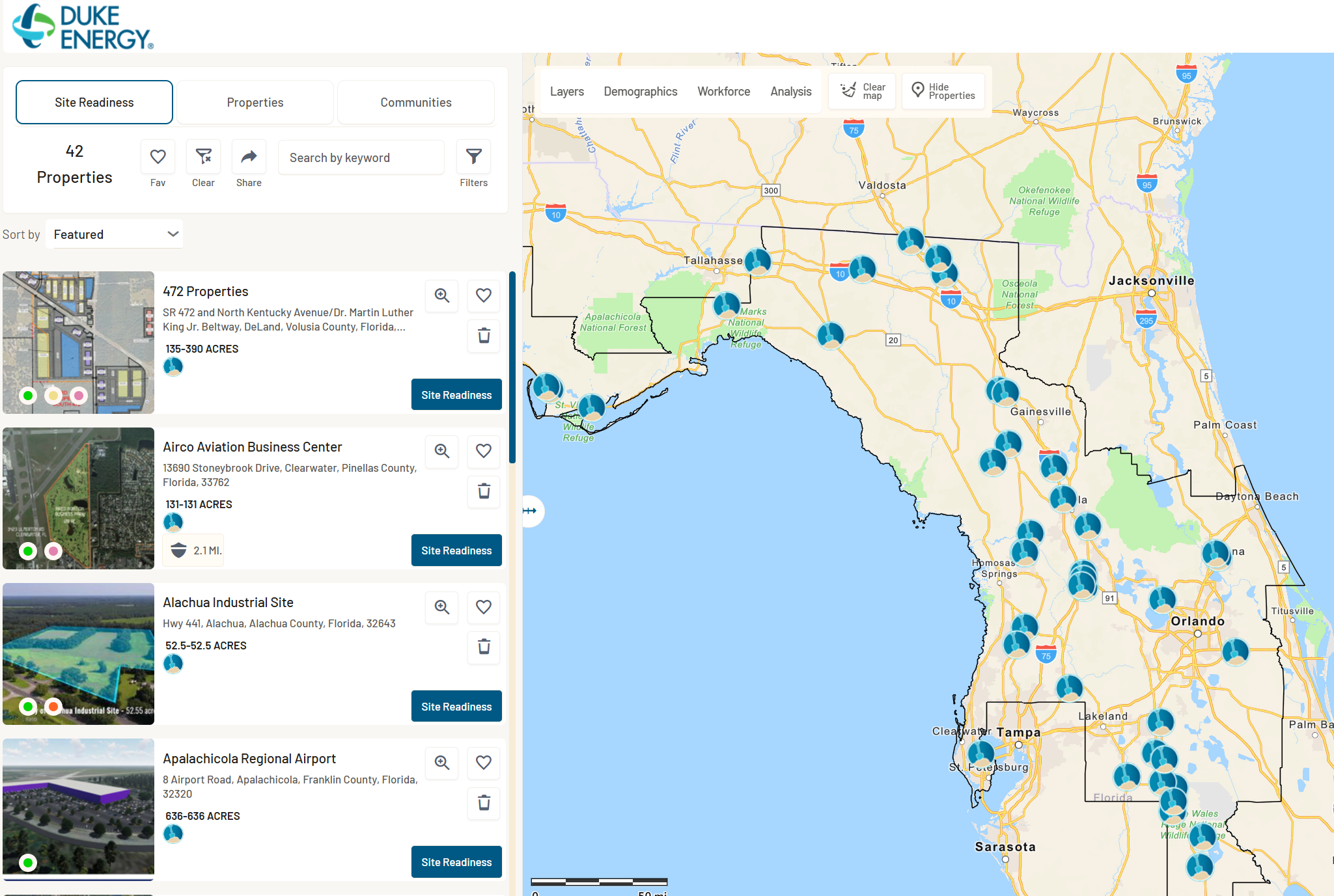
Featured properties: featuring a property in the listings drives 80% higher engagement
-
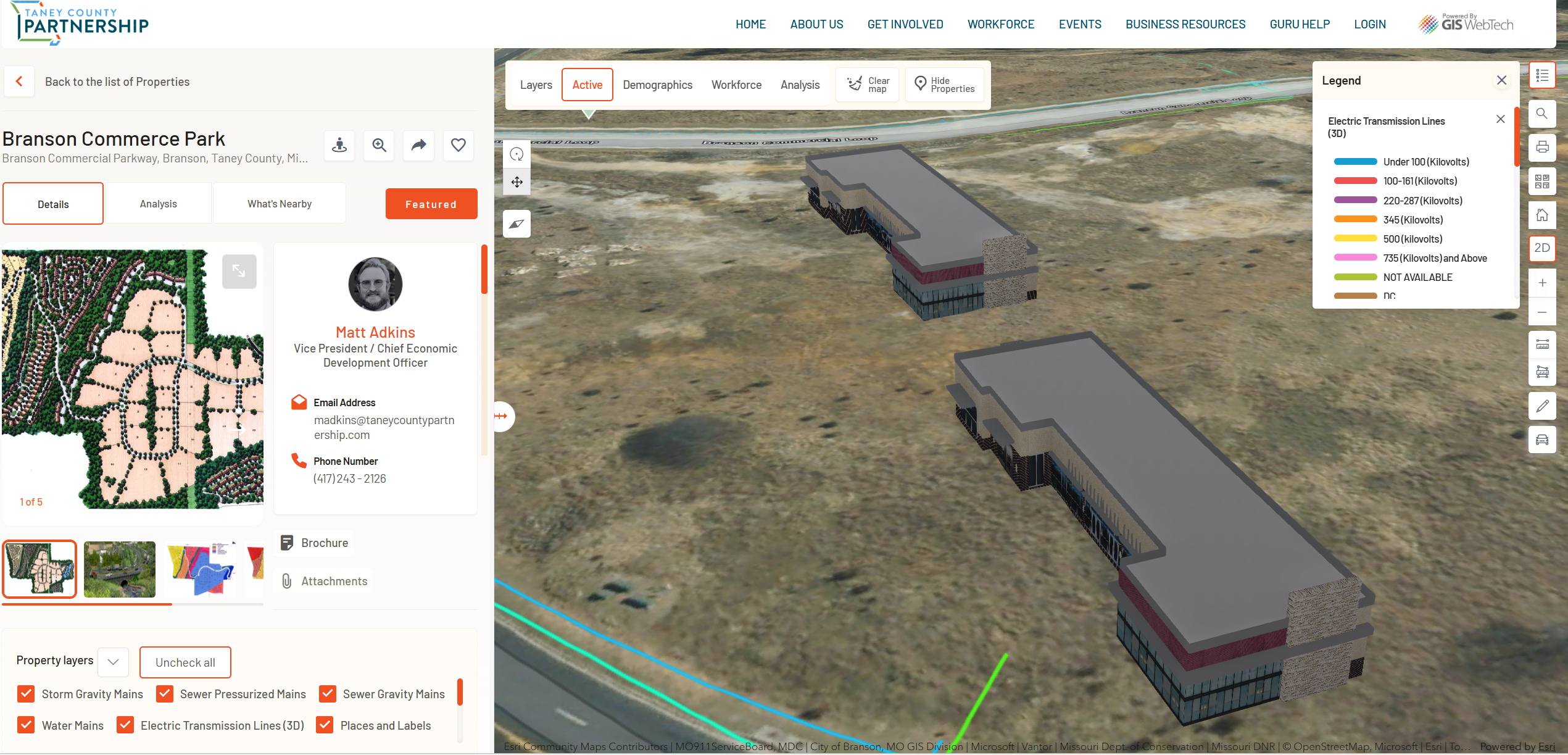
Properties staged with a 3D virtual building: staging a property with a 3D virtual building results in 75% higher engagement
- Available acreage: larger properties get 24% higher engagement
-
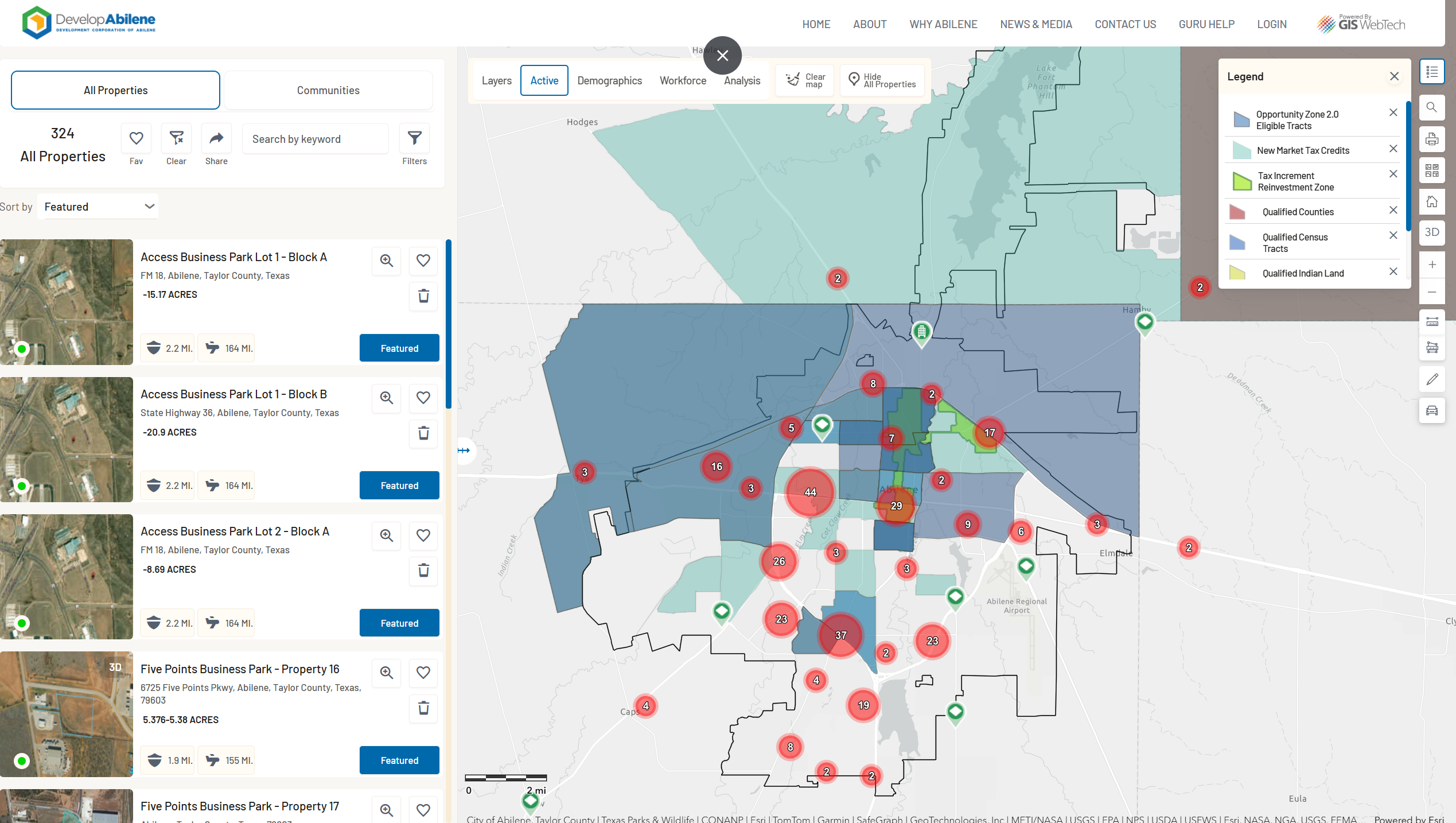
Properties staged with layers and supporting information: staging the property to showcase local data layers drives 24% higher engagement
- Available building square footage: larger buildings get 11% higher engagement
- Sites compared with buildings: Sites get11% higher engagement than buildings
- Distance to an airport: properties closer to airports get 4% higher engagement.
These percentages represent the calculated impact of each variable in isolation while holding the other variables constant. EDOS can drive even higher engagement by combining several of these drivers. For example, staging a property with a 3D virtual building, including local data layers in the property staging, and then featuring that property in the listings combines three major drivers. The result? Maximized engagement.
The most significant finding is that three of the four strongest drivers of engagement are within an EDO’s control.
Presentation Matters More Than Property Attributes
Featuring a property produced the largest increase in engagement identified by the analysis. This suggests that EDOs should be deliberate about which listings receive the most prominent placement rather than treating every property identically. EDOs should feature their most important properties, so they stand out in the listings.
Staging a property with a 3D virtual building was nearly as powerful. These visualizations can help users see the possibilities of an undeveloped site, making an otherwise empty property easier to understand and evaluate. 3D virtual buildings are particularly powerful ways of showcasing property use cases for target industries.
Adding relevant map layers and supporting information to the property staging also delivered a significant increase in engagement. Rail access, high-voltage power, local infrastructure like sewer and wastewater, property boundaries and other location intelligence can help prospective investors quickly recognize why a property deserves a closer look.
Together, these findings reinforce an important principle: Property marketing is not simply about supplying data. It is about presenting that data in a way that helps businesses and site selectors envision opportunity while maximizing the visibility and appeal of a community’s available properties.
A More Strategic Approach to Property Marketing
EDOs can use these findings to prioritize both properties and marketing resources.
The first step is to identify the properties with the greatest potential value. The analysis shows that sites, especially those with more acreage, buildings with more square footage, and properties closer to airports get the most interest, but EDOS should select high-value properties within the context of their target industries, local strategy, and community strengths. The next step is to strengthen how those properties are presented to maximize engagement. High-priority properties should be featured so they stand out in the listings, enhanced with virtual buildings, especially those relevant for target industries and high-value property use cases, and supported by relevant infrastructure layers, boundaries and on-screen information. Combining these drivers for your highest-value properties maximizes engagement.
This does not mean that every property needs the same level of enhancement. A focused strategy allows an EDO to invest its time and utilize technology where those resources are most likely to have the biggest impact.
Turning Property Data into a Marketing Advantage
Online property databases are now nearly universal in economic development, but the quality and presentation of those listings can vary considerably.
Our analysis demonstrates that property presentation has a bigger impact than physical characteristics. In driving engagement. Economic developers can take practical steps to make listings more visible, informative, and compelling.
By identifying high-value properties and using technology to showcase their possibilities, EDOs can move beyond simply displaying available sites and buildings. They can create a more engaging property-search experience that helps prospective investors see why a location belongs on their shortlist.