Blog
GURU supports your major economic development workflows with integrated, cutting-edge features.
Navigating Opportunity Zones 2.0 with Data & Strategy:
Key Takeaways from Our Quarter 2 Let’s Talk Tech Webinar
In our Q2 Let’s Talk Tech webinar, industry experts came together to discuss how communities can prepare for Opportunity Zones 2.0 (OZ 2.0)—and why this next phase will require a more strategic, data-driven approach.
Watch the full webinar recording here
- Michael O’Mara, Opportunity Zone Strategist, Ascension Advisors
- Joe Arnke, GIS WebTech
- Ron Bertasi, CEO, GIS WebTech
- Hosted by Melanie Moore, GIS WebTech
OZ 2.0: A More Intentional Approach
The transition from OZ 1.0 to 2.0 marks a significant shift. While the first round was often reactive, OZ 2.0 is focused on planning, alignment, and long-term impact.
States will soon nominate a limited number of zones, and once selected, those designations will remain in place for 10 years, making early preparation critical.

“OZ 1.0 was more of a dartboard approach… This time, we have the time and the resources to do a better job selecting the right census tracts.”
New: National OZ 2.0 Layer in GURU Site Selection
A key highlight from the webinar was the introduction of a nationwide Opportunity Zones 2.0 eligibility layer, developed by Joe Arnke and now available in all GURU Site Selection accounts.
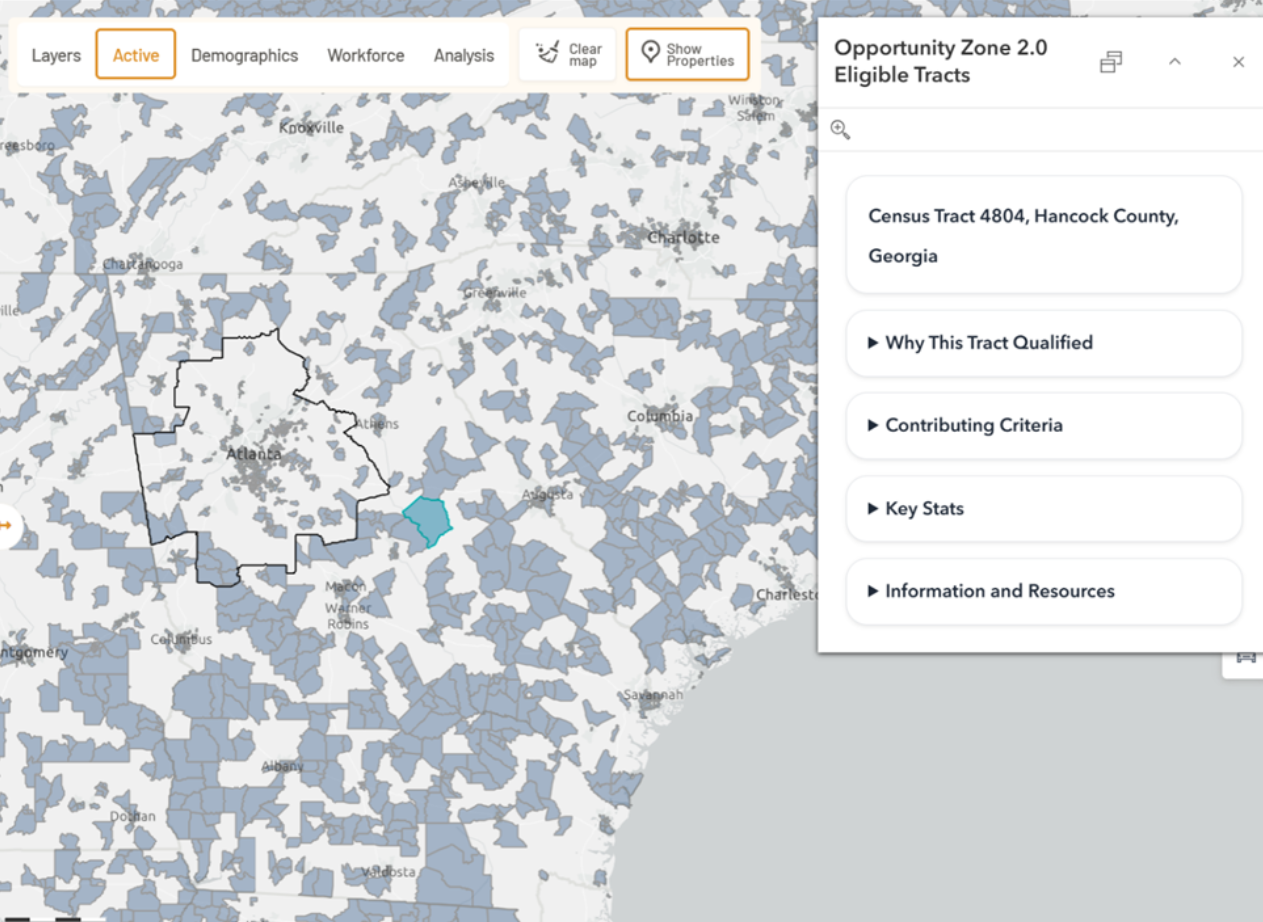
This layer includes:
- 25,000+ eligible census tracts
- Official IRS data
- Key indicators like income, poverty, unemployment, and rural status
With this data built directly into GURU Site Selection, economic developers can immediately begin evaluating and comparing opportunities.

“This layer outlines the official eligible track listing on a map… along with supplemental data to give greater insight into the tracts.”
From Eligibility to Investability
A central theme of the discussion was the shift from simply identifying eligible tracts to selecting those most likely to succeed.
That means evaluating factors like:
- Market feasibility and ability to attract private capital
- Infrastructure and site readiness
- Alignment with community needs and development goals
GURU Site Selection enhances this process by allowing users to layer additional datasets—such as infrastructure, energy costs, and incentives—to better understand true investment potential.
A Data-Driven Path Forward
The speakers outlined a clear, repeatable approach for OZ 2.0 success:
- Align stakeholders around a shared strategy
- Define and weight selection criteria like “investability”
- Analyze and rank eligible tracts using data
- Collaborate with state leadership on final selections
- Track and report results over time
This structured approach ensures decisions are both objective and defensible, while still accommodating real-world considerations.
Final Takeaway
Opportunity Zones 2.0 represents a second chance to get it right, with better tools, better data, and better alignment between public and private stakeholders.
Communities that take a proactive, data-driven approach today will be best positioned to attract capital and deliver meaningful economic impact over the next decade.

“The goal is not just to select tracts… but to select tracts most likely to generate investment and job creation.”
The new OZ 2.0 layer is now available for all GURU site selection customers. If you are not a current customer and would like to see the Opportunity Zones 2.0 layer in action, schedule a demo.